


Rudolf Cardenas
Skeptical Tennessee Homeowners SoftPro Elite HE Review
 />
/>Hi, I'm Henry G. I live in Tennessee. Craig "The Water Guy" Phillips asked me to share my real homeowner experience with the city tap water and the SoftPro® Elite HE Water Softener for City Water (Industry's Best Softener & Filter Combo) I purchased.
This is how my adventure unfolded. I hope this helps you make your decision.
The Hard Water Problem That Finally Pushed Me Over the Edge
Living in Tennessee, I thought I knew what hard water was. Boy, was I wrong.
For three years, I watched my coffee maker die a slow, calcium-crusted death. The dishwasher left spots on everything—even plastic containers came out looking like they'd been dusted with flour. My wife started buying bottled water for her morning coffee because our tap water left this metallic aftertaste that lingered for hours.
But the breaking point came last spring when our water heater started making sounds like a washing machine full of gravel. The plumber who came to inspect it took one look and said, "You need a water softener yesterday, or you'll be replacing this unit in six months." That visit cost me $180 just for the diagnosis.
Did you know that hard water can reduce your water heater's efficiency by up to 25%?
I sure didn't, but my utility bills were starting to tell that story. Our monthly electric bill had crept up $40-50 over the past year, and I couldn't figure out why until the plumber explained how mineral buildup forces water heaters to work harder.
The city water report showed our hardness at 18 grains per gallon—what the water department politely called "very hard." What they didn't mention was the chlorine smell that hit you every morning when you turned on the shower, or how our white clothes were starting to look dingy gray no matter what detergent we used.
I'd tried those magnetic water conditioners and salt-free systems from the hardware store. Total waste of money. The problems kept getting worse, and I was running out of patience and appliances to replace.
My Research Journey Into Water Softener Technologies
 >
>I spent two months researching water softening systems, and let me tell you—it's a confusing market. Everyone claims to have the "best" technology, but most manufacturers are pushing the same basic salt-based ion exchange process that's been around for decades.
What caught my attention about the SoftPro Elite HE was the combination approach. Instead of just softening water, this system also tackles chlorine, chloramines, and other city water additives that cause taste and odor problems. Most water softeners ignore these issues completely.
The technical specs were impressive: 64,000 grain capacity with their proprietary high-efficiency resin that regenerates based on actual usage, not a timer. The SoftPro Valve technology monitors water consumption and only regenerates when needed, which appealed to my engineer brain and my wallet.
I called three local water treatment companies for quotes. Two tried to sell me basic timer-based systems for $3,500-4,200. The third guy was honest: "For your hardness level and household size, you need something more sophisticated. Those cheap systems will regenerate every other day and waste a fortune in salt."
That's when he mentioned SoftPro's demand-initiated regeneration. Unlike timer systems that regenerate on a schedule whether you've used water or not, the Elite HE only regenerates when the resin bed is actually exhausted. For a household like ours (family of four with teenage kids who take marathon showers), this could save 30-40% on salt and water usage.
The combination carbon filter component was another selling point. Our city adds chloramines for disinfection, and standard carbon filters can't handle them effectively. SoftPro's catalytic carbon media specifically targets chloramines while also removing the chlorine taste and smell.
Unboxing and First Impressions of the SoftPro Elite HE
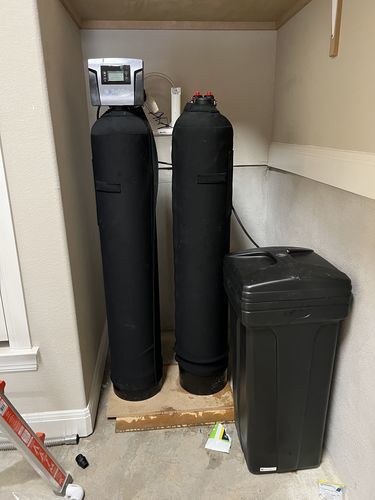
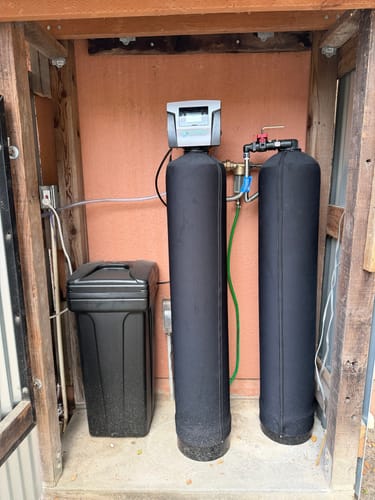
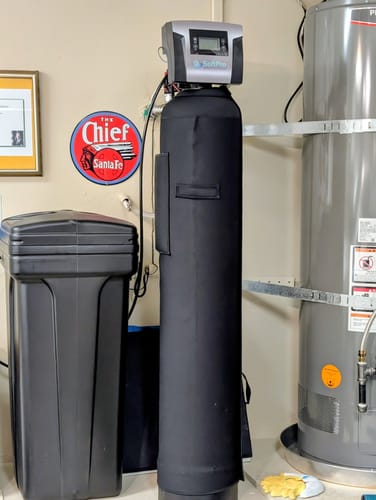
The system arrived on a freight truck in three separate boxes—much bigger than I expected. The main softener tank stood about 54 inches tall, and the brine tank was a substantial 18x33 inches. This isn't a system you hide in a closet; it needs dedicated space.
Build quality impressed me immediately. The fiberglass tanks felt solid and substantial, not like the plastic units I'd seen at home improvement stores. The SoftPro Valve housing was metal with a digital display that actually looked professional, not like a cheap appliance timer.
All the fittings were brass, not plastic. The bypass valve was heavy-duty and clearly designed for frequent use. Even the brine tank had thoughtful details like a overflow prevention system and easy-access salt grid.
The documentation was thorough—a 32-page manual with actual installation diagrams, not the usual one-page cartoon instructions. They included a water testing kit, installation hardware, and even a bottle of sanitizing solution for the initial system flush.
One surprise was the weight. The softener tank alone was 85 pounds empty. My neighbor helped me move it to the basement, and we had to take our time navigating the stairs. This is definitely not a DIY move for most people.
Installation Experience and Initial Setup Challenges
I'm reasonably handy with plumbing, but I hired a certified installer for this job. At $400, it seemed expensive until I watched him work. The installation took six hours and required skills I definitely don't have.
The main challenge was integrating the system into our existing plumbing without disrupting water service for too long. Our house has the main line running through a crawl space that's barely accessible. The installer had to cut into the main line, install a proper bypass loop, and connect both the inlet and outlet with shutoff valves.
The SoftPro Valve required a 120V outlet, which meant running electrical to the utility room. Fortunately, we had an outlet about eight feet away, so that wasn't a major issue. The installer explained that the valve needs power for the regeneration cycle and the digital controls.
Programming the system was more complex than I expected. The installer walked me through setting the hardness level (18 grains), household size (4 people), and iron compensation (we had trace levels). The SoftPro Valve can be programmed for specific regeneration preferences, salt efficiency modes, and even vacation settings.
The initial system flush took about 45 minutes. We had to run cold water at several faucets to clear the carbon fines and sanitizing solution from the lines. The first water that came out was black and cloudy—exactly what the manual said to expect.
By evening, we were running soft water throughout the house. The installer tested the output at 0 grains hardness and scheduled a follow-up call for the next week to check system performance.
Deep Dive Into Performance and Feature Analysis
 >
> Softening Performance
The ion exchange process works exactly as advertised. Within 24 hours, I could feel the difference in the shower water. That slippery feeling that some people complain about was noticeable but not unpleasant—it just meant the soap was actually rinsing off instead of forming scum.
I tested the water weekly for the first month using test strips. Inlet hardness consistently measured 17-19 grains, while outlet water tested at 0-1 grains. The system maintained this performance even during peak usage periods when both teenagers were showering simultaneously while the dishwasher was running.
Regeneration Efficiency
The demand-initiated regeneration is where this system really shines. Instead of regenerating every three days like our neighbor's timer-based system, the Elite HE regenerates every 5-7 days based on actual water usage. The SoftPro Valve tracks consumption and calculates remaining capacity in real time.
Regeneration cycles happen at 2:00 AM and take about 90 minutes. I've never been awakened by the process, though you can hear water moving if you're paying attention. The system uses approximately 35 gallons of water per regeneration cycle—less than a load of laundry.
Carbon Filter Performance
The chloramine removal was immediately obvious. Our water went from smelling like a swimming pool to having virtually no odor. Coffee tastes significantly better, and my wife stopped buying bottled water within the first week.
The catalytic carbon media is supposed to last 3-5 years depending on chloramine levels. At eight months, I haven't noticed any decline in taste or odor improvement, though I know the softening resin will last much longer—typically 10-15 years with proper maintenance.
Digital Control System
The SoftPro Valve display shows current hardness levels, days until regeneration, total water usage, and system status. During regeneration, it displays which cycle phase is active (backwash, brine draw, rinse, etc.).
The diagnostic capabilities are impressive for a residential system. The valve tracks salt usage, regeneration frequency, water flow rates, and can detect problems like loss of power or low salt conditions. Error codes are displayed in plain English, not cryptic numbers.
Real-World Daily Living Impact After Eight Months
The transformation in our daily life has been more significant than I anticipated. It's not just about softer water—it's about all the little improvements that add up.
Bathroom and Personal Care
Showers are completely different now. Soap and shampoo lather properly, and everything rinses clean. My wife's hair feels softer and doesn't need as much conditioner. Both teenagers commented (without prompting) that their skin felt less dry and itchy.
The shower doors stay cleaner dramatically longer. I used to scrub soap scum weekly; now I clean them monthly and it's mostly just dust and normal bathroom grime. The faucets and fixtures maintain their shine instead of developing that chalky white buildup.
Kitchen and Appliances
Our dishwasher performs like it's new again. Glassware comes out crystal clear, and I haven't used rinse aid in months. The coffee maker hasn't needed descaling since installation—before, I was running vinegar through it monthly.
The ice maker in our refrigerator produces clear, taste-free cubes now. Previously, ice had a chlorine taste that was especially noticeable in drinks. My teenage son actually drinks tap water now instead of demanding sports drinks constantly.
Laundry Improvements
Clothes washing has improved dramatically. Colors stay brighter, whites stay white, and everything feels softer without fabric softener. I've reduced detergent usage by about a third while getting better results.
Our white towels had started looking gray and feeling rough. Within a month of soft water, they were noticeably brighter and fluffier. The washing machine itself runs quieter and doesn't leave mineral deposits on the drum.
Unexpected Household Benefits
Cleaning throughout the house is easier and requires fewer products. Soap scum doesn't form in the bathtubs, so weekly cleaning is quick and simple. Even our humidifiers run cleaner and don't develop the white dust buildup that used to coat everything nearby.
Operating Costs and Long-Term Efficiency Analysis
id="LOOX-V2_CAROUSEL-photo-reviews"
data-product-ids="7287104831530"
data-slide-type="photo_reviews"
data-show-review-text="true"
data-show-reviewer-name="true"
data-show-rating="true"
data-show-photos="true"
>
Salt Consumption and Costs
The system uses about 80 pounds of salt per month for our family of four. At $6 per 40-pound bag from the hardware store, that's roughly $12 monthly for salt—less than I expected based on online complaints about "expensive salt bills."
The high-efficiency regeneration cycle uses less salt than traditional systems. Where older systems might use 15-18 pounds per regeneration, the Elite HE uses 8-10 pounds while achieving the same softening performance.
Water and Electricity Usage
Each regeneration cycle uses about 35 gallons of water, which costs approximately $0.12 with our municipal rates. With regeneration every 5-7 days, monthly water costs for system operation are under $2.
Electricity usage is minimal—the SoftPro Valve draws about the same power as a digital clock. I couldn't detect any increase in our monthly electric bill that could be attributed to the water softener operation.
Maintenance Expenses
So far, maintenance has been limited to adding salt and occasional cleaning of the brine tank. The carbon filter media will need replacement in 4-5 years at an estimated cost of $150-200. The softening resin should last 10-15 years with normal use.
Savings Generated
Our soap and detergent usage has decreased by 25-30%, saving about $15 monthly. The water heater runs more efficiently—our electric bill dropped approximately $25 per month, though some of this could be seasonal variation.
More importantly, we've avoided appliance replacement costs. The coffee maker, dishwasher, and water heater are all performing better and should last significantly longer without mineral damage.
Honest Assessment of Limitations and Drawbacks
Space Requirements
The system footprint is substantial—about 4 square feet including clearance for maintenance access. If you're short on utility room space, this could be a deal-breaker. The height requirement (about 6 feet total) ruled out installation under our basement stairs.
Installation Complexity
This isn't a DIY project unless you're experienced with plumbing and electrical work. Professional installation added $400 to the total cost, and it was money well spent. Improper installation could void the warranty and create expensive problems.
Initial Water Taste Adjustment
For the first few weeks, the soft water taste was noticeably different. Some family members found drinking water "too smooth" compared to what we were used to. This adjustment period is normal, but it's worth mentioning for people sensitive to taste changes.
Salt Handling
Lifting 40-pound salt bags and emptying them into the brine tank isn't difficult, but it's a monthly chore. The tank holds about 200 pounds of salt, https://www.trustpilot.com/review/softprowatersystems.com so refilling happens every 6-8 weeks. For elderly homeowners or people with mobility issues, this could be challenging.
Regeneration Schedule
Although regeneration happens in the middle of the night, you shouldn't use hot water during the cycle. This has been a non-issue for us, but it could inconvenience people who work night shifts or have unusual schedules.
Cost Considerations
The upfront investment is significant—$2,800 for the system plus $400 installation in our area. While the long-term savings justify the expense, it's still a substantial cash outlay that might strain some budgets.
Final Verdict and Recommendation After Eight Months
 >
>After eight months of daily use, I'm convinced the SoftPro Elite HE was the right choice for our situation. The combination of effective softening and comprehensive filtration solved multiple water quality issues with a single system.
Key Strengths That Stand Out
The demand-initiated regeneration technology delivers on its efficiency promises. We're using less salt and water than projected, while maintaining consistent performance. The SoftPro Valve system is sophisticated without being complicated—the digital display provides useful information without requiring a computer science degree to interpret.
Build quality exceeds my expectations. After eight months, everything looks and operates like new. The controls are intuitive, maintenance is straightforward, and performance has been completely reliable.
The taste and odor improvement was an unexpected bonus that adds significant value. Eliminating chloramine taste made our tap water genuinely pleasant to drink, saving money on bottled water while improving our daily experience.
Value Assessment
At $3,200 total investment, this system costs more than basic softeners but delivers more comprehensive water treatment. Considering the appliance protection, reduced cleaning products, energy savings, and improved water quality, the payback period is roughly 3-4 years.
Confidence Level
I'd confidently recommend this system to homeowners dealing with hard water plus taste and odor issues from city water treatment. For families who value water quality and long-term appliance protection, the Elite HE provides excellent value despite the higher upfront cost.
Future Outlook
Based on current performance and build quality, I expect this system to provide trouble-free operation for many years. Would I purchase it again knowing what I know now?
Absolutely. The daily quality-of-life improvements alone justify the investment, and the long-term savings make it financially sensible.
If you're dealing with hard city water that tastes like a swimming pool and you're tired of replacing appliances prematurely, the SoftPro Elite HE deserves serious consideration. It's not the cheapest solution, but it's been the most effective one I've found.
حصة الملف الشخصي