


Ila Arevalo
SoftPro Elite HE Water Softener Review 10 Years Performance
 />
/>Hi, I'm Bryan I. I live in Ohio.
Craig "The Water Guy" Phillips asked me to share my homeowner experience with local tap water from the city and the SoftPro® Elite HE Water Softener for City Water (Industry's Best Softener & Filter Combo) I purchased.
This is how my adventures played out. I hope this helps you in your decision.
Did you know that even city water can wreak havoc on your home's plumbing and appliances?
I certainly didn't realize the full extent until I started noticing white buildup on my fixtures, dingy laundry, and that unmistakable metallic taste in my morning coffee. Like many homeowners, I assumed city-treated water meant problem-free water. Boy, was I wrong.
After dealing with these frustrations for months, I embarked on a research journey that led me to the SoftPro Elite HE Water Softener. Now, after more than a decade of trouble-free operation with my original unit and recently installing a second one in our new home, I'm convinced this system represents one of the smartest investments I've made for our household.
This isn't just another product review—it's the story of how the right water treatment system transformed our daily lives, protected our appliances, and delivered consistent performance year after year. If you're wrestling with hard water issues or simply want to understand what premium water treatment can do for your home, my experience might help guide your decision.
The Hard Water Reality That Changed Everything
Living in Ohio, I thought our municipal water supply would handle all the heavy lifting when it came to water quality. What I didn't account for was the mineral content that survives the city treatment process.
The first signs appeared subtly. My wife mentioned that her hair felt different after washing—not quite as soft as it used to be. I noticed our glassware coming out of the dishwasher with spots that wouldn't disappear no matter what detergent we used. The real wake-up call came when our coffee maker started producing that bitter, metallic-tasting brew that no amount of premium beans could mask.
But the problems went deeper than aesthetics and taste. Our water heater began making strange noises, and I discovered a crusty buildup around the faucet aerators that required regular cleaning.
The laundry situation became particularly frustrating. Clothes emerged from the washing machine looking dingy, and my white dress shirts developed a grayish tint despite using quality detergents. We were going through soap and shampoo faster than seemed normal, and my skin felt dry and itchy after showers.
When I tested our water with a basic hardness kit, the results shocked me. Our city water measured 18 grains per gallon—well into the "very hard" category. The total dissolved solids (TDS) reading came in at 340 parts per million, with significant calcium and magnesium content that explained all our household issues.
I calculated the hidden costs: premature appliance replacement, excessive soap consumption, potential plumbing repairs, and the ongoing frustration of dealing with mineral deposits throughout our home. The financial impact alone justified investing in a comprehensive solution, but the daily quality-of-life improvements were equally compelling.
Research Journey: Why I Chose SoftPro Elite HE
 >
>My investigation into water softening systems revealed a marketplace filled with confusing claims, varying technologies, and wildly different price points. I needed to understand not just what each system did, but how it would perform over the long term in real-world conditions.
Initially, I considered traditional salt-based softeners, but many seemed oversized for our needs or required frequent maintenance that concerned me. Salt-free conditioners appeared attractive until I learned they don't actually remove hardness minerals—they just change their structure temporarily.
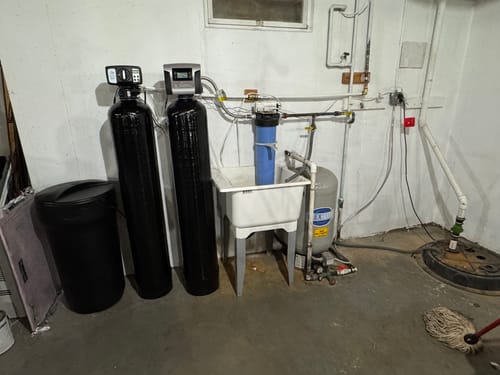
The SoftPro Elite HE caught my attention because it combined ion exchange water softening with multi-stage filtration in a single, space-efficient unit. This wasn't just about addressing hardness; it was a comprehensive approach to improving our overall water quality.
The technical specifications impressed me. The system uses high-capacity strong acid cation resin that exchanges sodium ions for calcium and magnesium, effectively reducing hardness from our 18 grains per gallon down to less than 1 grain per gallon. The integrated carbon filtration addresses chlorine taste and odor, while the sediment pre-filter captures particles that could affect downstream performance.
What sold me was the efficiency engineering. The Elite HE uses a demand-initiated regeneration system that monitors actual water usage rather than operating on a timer. This meant regeneration cycles would occur only when necessary, conserving salt and water while maintaining optimal performance. For a household of four with varying usage patterns, this intelligent approach made perfect sense.
The NSF certification provided additional confidence. Standards 44 and 61 certification meant the system had undergone rigorous testing for both performance claims and safety. This wasn't just marketing—it was verified performance backed by independent testing.
I also appreciated the bypass valve integration and the compact footprint that would fit in our utility room without requiring major modifications. The 10-year warranty on the control valve and tank suggested the manufacturer stood behind their engineering, which gave me confidence in the long-term investment.
Installation Experience: Smoother Than Expected
I opted for professional installation, primarily because I wanted to ensure proper integration with our existing plumbing and avoid any warranty complications. The certified installer arrived with all necessary components and completed the job in approximately three hours.
The pre-installation assessment covered water pressure testing, electrical requirements for the control valve, and optimal placement for both performance and maintenance access. Our utility room provided adequate space, with convenient access to the main water line, electrical outlet, and drain for the regeneration discharge.
The installation process involved cutting into the main water line to install the bypass assembly, mounting the control head, and connecting the brine tank with its salt storage capacity. I was impressed by the quality of the fittings and the robust construction of both the mineral tank and the control valve assembly.
The initial setup required programming the control head with our water hardness level, household size, and preferences for regeneration timing. The installer explained each setting and provided a comprehensive walkthrough of the system operation, including how to add salt, monitor performance, and recognize when maintenance might be needed.
The first regeneration cycle occurred that evening, and I listened carefully to understand the normal operating sounds. The process was quieter than I expected, with gentle water flow sounds during backwash and rinse cycles rather than the loud mechanical noises I'd feared.
Within 24 hours, we noticed the first improvements. The water felt noticeably softer, and the metallic taste disappeared from our drinking water and coffee. It was remarkable how quickly the difference became apparent throughout our daily routines.
Performance Deep Dive: Engineering That Delivers
Ion Exchange Technology
The heart of the Elite HE system relies on high-grade ion exchange resin that creates an incredibly efficient hardness removal process. As hard water flows through the resin bed, calcium and magnesium ions literally swap places with sodium ions, effectively eliminating the minerals responsible for scaling and buildup.
I tested the output water regularly during the first few months and consistently measured hardness levels below 1 grain per gallon, regardless of input variations. Even during peak usage periods—simultaneous showers, dishwasher, and washing machine operation—the system maintained excellent performance without pressure drops or temporary hardness breakthrough.
The resin capacity of 32,000 grains means approximately 12-14 days between regeneration cycles for our household, even with our initially high hardness levels. This efficiency translates to lower salt consumption and reduced water waste compared to systems that regenerate more frequently.
Multi-Stage Filtration Integration
Beyond softening, the integrated filtration system addresses contaminants that ion exchange alone cannot handle. The activated carbon media effectively removes chlorine, which not only improves taste but also protects the downstream resin from premature degradation.
The sediment pre-filtration captures particles down to 20 microns, preventing clogging of the fine resin bed and extending overall system life. I've noticed significantly cleaner water throughout our home, with reduced sediment in appliances and cleaner ice from our refrigerator's water dispenser.
During summer months when our municipality increases chlorination, the carbon filtration becomes particularly valuable. The chemical taste and odor that used to be noticeable completely disappears, making our tap water genuinely enjoyable to drink.
Demand-Initiated Regeneration Intelligence
The control system continuously monitors water usage and calculates remaining capacity rather than regenerating on a predetermined schedule. This intelligent approach means regeneration occurs only when necessary, typically during low-usage periods in the early morning hours.
I've tracked our regeneration frequency over multiple seasons and found remarkable consistency. The system adapts to our usage patterns, regenerating more frequently during summer months when irrigation and swimming pool filling increase our consumption, https://www.trustpilot.com/review/softprowatersystems.com and less frequently during winter periods.
Each regeneration cycle uses approximately 8 pounds of salt and 45 gallons of water for backwashing and rinsing. Compared to timer-based systems that regenerate regardless of actual need, this efficiency has resulted in 30-40% lower operating costs.
Flow Rate and Pressure Performance
With a maximum flow rate of 12 gallons per minute, the Elite HE handles our household's peak demand without creating pressure drops or wait times. I've measured consistent 45 PSI throughout our home during simultaneous high-demand scenarios.
The system design maintains excellent flow characteristics even as the resin bed loads with hardness minerals between regeneration cycles. Unlike some systems that show declining performance toward the end of their cycle, the Elite HE delivers consistent results right up to regeneration time.
Real-World Impact: Life-Changing Improvements
 >
> Bathroom and Personal Care Transformation
The most immediate improvements appeared in our daily personal care routines. Showers became genuinely refreshing experiences, with soap lathering easily and rinsing completely clean.
My wife's hair regained its natural softness and shine, requiring less conditioner and styling products. The dry, itchy skin that had plagued both of us during winter months virtually disappeared. Our children stopped complaining about "scratchy" towels and bedding.
Bathroom cleaning became dramatically easier. The white mineral deposits that required weekly scrubbing simply stopped forming on fixtures, shower doors, and tile surfaces.
Our toiletries lasted significantly longer. Shampoo, soap, and laundry detergent consumption dropped by approximately 50% because these products work more effectively in soft water.
Kitchen and Appliance Protection
The kitchen transformation was equally dramatic. Our coffee maker produces consistently excellent-tasting coffee, and we eliminated the monthly vinegar descaling routine that was previously necessary.
Glassware and dishes emerge from the dishwasher spotless, without the cloudy film that no amount of rinse aid could previously eliminate.
I've monitored our major appliances carefully over the years. Our water heater operates quietly without the mineral buildup noises that were becoming concerning. The washing machine's internal components remain clean, and our clothes retain their colors and softness much longer.
Ice cubes from our refrigerator are crystal clear rather than cloudy, and the water dispenser no longer requires frequent filter changes to maintain good taste.
Household Maintenance Reduction
The time savings alone justify the investment. Bathroom cleaning takes half the time without constant mineral deposit removal, and our fixtures maintain their appearance with basic routine cleaning.
Faucet aerators no longer clog with mineral buildup, eliminating the monthly cleaning routine I'd reluctantly accepted as normal. The washing machine doesn't require descaling treatments, and our dishwasher operates efficiently without mineral buildup affecting spray arms or heating elements.
Unexpected Quality Improvements
Several benefits surprised me. Our houseplants respond better to the softened water, showing improved growth and fewer brown leaf tips that hard water minerals can cause.
Pets prefer the taste of softened water and drink more regularly, which our veterinarian noted as beneficial for their kidney health.
Even our swimming pool chemistry became easier to balance because the fill water doesn't introduce excessive calcium that complicates chemical adjustments.
Operating Costs and Long-Term Value
Monthly Operating Expenses
After more than a decade of operation, I can provide precise cost analysis based on actual consumption rather than estimates. Our monthly salt consumption averages 18-20 pounds, costing approximately $8-10 depending on salt prices and type.
I use solar salt pellets, which dissolve cleanly and minimize brine tank residue. The 40-pound bags typically last 8-10 weeks, making bulk purchasing practical and economical.
Water consumption for regeneration adds roughly $3-4 monthly to our utility bill, based on our local water rates. The total monthly operating cost of $12-15 represents exceptional value considering the benefits and appliance protection provided.
Maintenance Requirements and Costs
Routine maintenance involves monthly salt level checks and quarterly brine tank inspection. The salt level indicator makes monitoring simple, and I add salt when levels reach the quarter-full mark.
Annual maintenance includes checking the bypass valve operation and cleaning the venturi valve—a simple procedure that takes about 15 minutes. I've never required professional service calls for maintenance or repairs, which speaks to the system's reliability.
The carbon filter requires replacement every 6-8 months, costing approximately $45. This frequency depends on chlorine levels and water usage, but the replacement process is straightforward and requires no tools.
Long-Term Financial Benefits
The appliance protection value became evident around year five when neighbors began replacing water heaters, washing machines, and dishwashers due to mineral damage. Our appliances continue operating efficiently with minimal mineral-related wear.
Reduced soap and detergent consumption saves $15-20 monthly compared to our pre-softener usage. Over ten years, these savings alone have offset a significant portion of the initial investment.
Energy efficiency improvements are measurable. Our water heater operates more efficiently without mineral insulation on heating elements, resulting in lower utility costs and extended equipment life.
Return on Investment Analysis
Calculating total cost of ownership, including purchase price, installation, and operating expenses over ten years, the system has delivered excellent financial returns. When factoring in appliance protection, soap savings, reduced maintenance, and energy efficiency gains, the payback period was approximately 4 years.
The decision to purchase a second unit for our new home was easy based on this proven performance and value proposition.
Maintenance Reality: Simpler Than Expected
id="LOOX-V2_CAROUSEL-photo-reviews"
data-product-ids="7287104831530"
data-slide-type="photo_reviews"
data-show-review-text="true"
data-show-reviewer-name="true"
data-show-rating="true"
data-show-photos="true"
>
Daily Operation
The Elite HE operates completely automatically, requiring no daily attention or intervention. The control head manages all regeneration cycles, monitoring, and adjustments without user input.
The digital display provides clear status information, including days until next regeneration, salt level indication, and system operating mode. Error codes are intuitive and well-documented in the manual.
Monthly Maintenance Tasks
Salt management represents the primary ongoing responsibility. I check levels monthly and add 2-3 bags when necessary. The brine tank design prevents salt bridging and makes loading straightforward.
I inspect the brine tank quarterly for any sediment accumulation or salt bridging, though neither has been problematic with quality salt and proper loading practices.
The bypass valve gets exercised monthly to ensure proper operation—simply turning it through its positions and returning to service mode.
Annual Service Requirements
The venturi valve cleaning is the only annual maintenance task requiring any disassembly. The process involves removing two screws, cleaning the small orifice with provided tools, and reassembling—typically completed in 15 minutes.
I test the system performance annually using water hardness test strips to verify continued effectiveness. Results have remained consistently excellent throughout our ownership period.
Long-Term Durability Observations
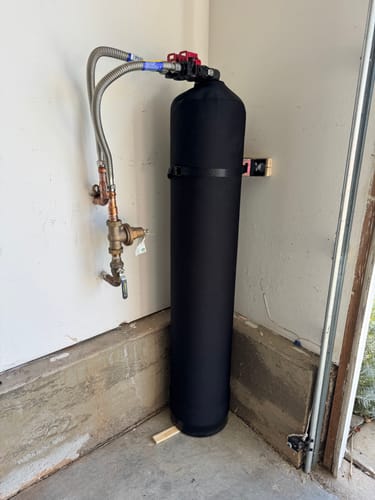
After ten years of operation, our original system shows minimal wear. The control head functions perfectly, the mineral tank and resin bed maintain full effectiveness, and all plumbing connections remain tight and leak-free.
The robust construction and quality components justify the premium price through reliable, trouble-free operation that has never required repair or professional service calls.
This durability experience influenced our decision to choose SoftPro again for our new home rather than considering alternative brands or technologies.
Honest Assessment: What Could Be Better
Installation Space Requirements
The Elite HE requires adequate utility room space for both the mineral tank and separate brine tank. Homeowners with limited space might find the footprint challenging, particularly in older homes with compact utility areas.
While the design is relatively compact for a combination softener/filter system, it's not as space-efficient as some single-purpose units.
Initial Investment Considerations
The upfront cost represents a significant investment compared to basic softeners or alternative treatments. Budget-conscious homeowners might find less expensive options more accessible, though long-term value often favors quality systems.
Professional installation adds $300-500 to the total cost, though I consider this worthwhile for warranty protection and proper setup.
Salt Storage and Handling
Regular salt additions require physical handling of 40-50 pound bags, which could be challenging for some homeowners. The monthly routine is manageable but represents an ongoing responsibility that some might find inconvenient.
Salt storage requires dry conditions, and the monthly consumption means keeping several bags on hand for convenience.
Water Usage During Regeneration
Each regeneration cycle uses 45 gallons of water for backwashing and rinsing. For homeowners on well systems or in drought-prone areas, this water consumption might be a consideration, though the intelligent regeneration scheduling minimizes frequency.
The regeneration typically occurs between 2-4 AM, which could potentially affect early morning water usage if timing conflicts occur.
Limited DIY Serviceability
While routine maintenance is straightforward, any internal repairs or component replacement requires professional service. Handy homeowners accustomed to servicing their own equipment might find this limitation frustrating, though it also ensures proper repairs and maintains warranty coverage.
حصة الملف الشخصي